Understanding the difference: crack sealing vs sealcoating
We often help property owners decide whether a lot needs crack sealing, sealcoating, or both. The choice starts with the condition of the asphalt and the problem we need to address. These treatments serve different purposes, and our proposal explains how they fit together when both are appropriate.
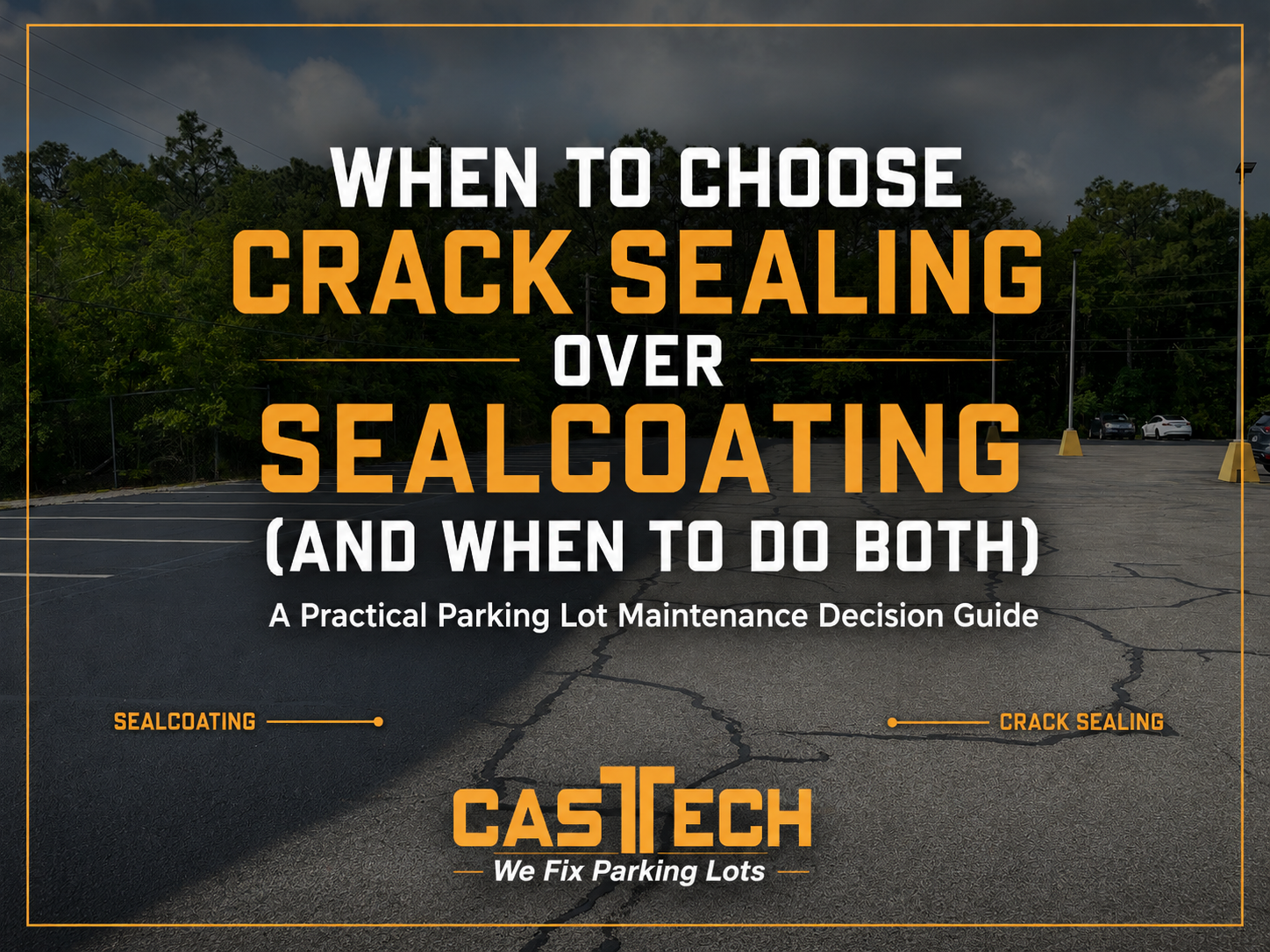
Crack sealing and sealcoating address two different problems. Crack sealing targets individual faults where water and debris enter the pavement structure; sealcoating provides a protective film across the surface to slow oxidation, UV damage, and wear. Knowing what each treatment does helps you select the most cost‑effective maintenance for your property.
- Crack sealing: fills and bonds along joints and stress cracks to prevent water infiltration and freeze/thaw damage.
- Sealcoating: applies a protective layer to the entire pavement surface to restore appearance and protect from oils, UV, and oxidation.
- Both together: when cracks are properly sealed first, a subsequent sealcoat gives full‑surface protection and a longer service life.
When to choose crack sealing
We evaluate isolated or linear cracks in otherwise serviceable pavement and recommends suitable crack sealing. Our crew prepares and treats the cracks included in the approved scope.
- Visible longitudinal or transverse cracks in otherwise serviceable asphalt that allow water into the pavement
- Cracks that are wider than hairline but have not caused pavement loss or potholes
- When you want to extend pavement life without a full surface treatment
- Before sealcoating — sealing cracks first allows the sealcoat to adhere and provides uniform protection
Interconnected alligator cracking, settlement, loose pavement, and potholes need evaluation for asphalt repair. Sealing alone does not rebuild failed pavement or its supporting base.
When to choose sealcoating
We assess surface weathering, pavement condition, and previous treatments before recommending sealcoating. Our team explains the preparation and repairs needed before applying a preservation coating.
- Surfaces with faded, greyed asphalt from UV and oil depletion
- Low to moderate traffic areas where the surface is generally intact
- As a preventative maintenance step every 2–4 years depending on traffic and climate
- After crack sealing to provide a continuous, protective layer
Why and when to do both treatments
For many commercial lots and municipal pavements, the best long‑term value is achieved by sealing cracks first, then applying a sealcoat. This two‑step approach addresses active infiltration points and also restores surface protection and friction.
- Work sequence: We prepare suitable cracks, including routing where specified, applies the selected sealant, and observes the required wait before coating.
- Combined treatments are cost‑effective compared with frequent patching or early mill-and-overlay
- Our team schedules combined work around the materials’ weather and curing requirements.
Timing, materials, and best practices
Choosing the right materials and timing improves outcomes. Use hot‑applied rubberized sealants or approved cold‑pour products for working cracks, and choose a sealcoat that suits traffic and climate. Proper preparation and experienced application are essential.
- Preparation: Our crew cleans the cracks, removes interfering vegetation, and completes the drying required for the specified treatment.
- Material selection: hot‑pour, polymer‑modified sealants are standard for high‑movement cracks; emulsions or refined coal tar blends are common for sealcoating depending on local specifications
- Curing and weather: Our crew follows the selected materials’ application and curing requirements.
- Traffic control: We plan work zones with your property team and confirms when treated areas can reopen.
- Inspection: annual or biennial inspections catch new cracks early and inform maintenance scheduling
FAQ
Q: Is crack treatment needed before sealcoating? A: we assess the crack pattern and pavement condition before recommending preparation. Our crew treats suitable cracks as specified in the scope; sealcoating alone does not repair failed pavement or replace needed crack work.
Q: How often should I arrange professional pavement maintenance? A: we recommend timing based on traffic, climate, pavement condition, and previous treatments. You arrange the review and approve the scope; our crew performs the agreed crack repairs, preparation, and coating.
Q: When is a mill-and-overlay or full replacement required instead of sealing or sealcoating?
A: If the pavement shows widespread structural distress — deep potholes, extensive alligator cracking, or settled areas indicating base failure — targeted sealing and sealcoating will not be effective. In those cases, a mill‑and‑overlay or full replacement is typically the correct corrective action.
Q: Should I use a contractor who does both services? A: Yes. A contractor experienced in both crack sealing and sealcoating will sequence work correctly, choose compatible materials, and explain the scope, follow-up care, and any warranty terms included in the proposal.
Let’s review what your pavement needs
We’ll assess the visible damage and discuss the appropriate repair or preservation sequence. Our crack sealing and sealcoating services can be coordinated where the pavement is suitable, with preparation and reopening requirements included in the work plan.
Contact us or call (850) 860-0014 to discuss your property location and arrange the appropriate next step.