Project overview
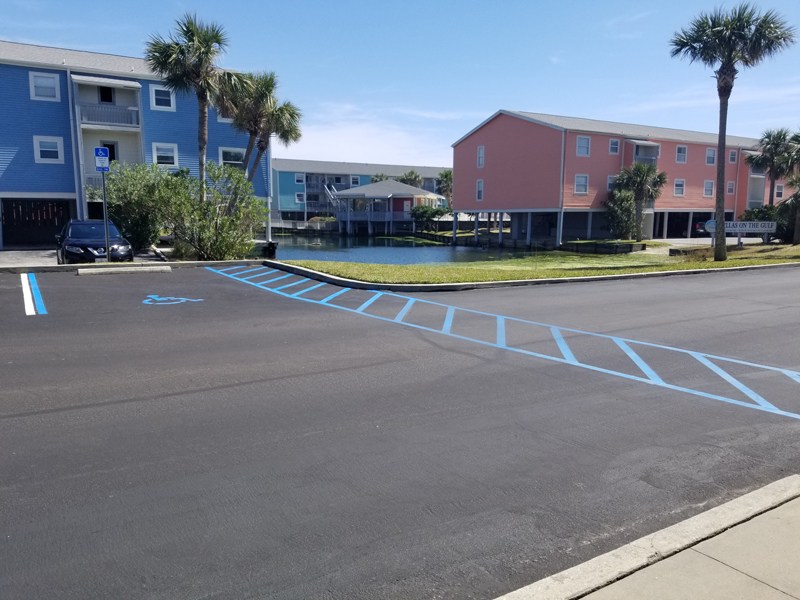
CasTech updated a beachfront condominium parking lot to improve accessibility by restriping designated accessible parking spaces, painting access aisles, and verifying signage placement. The work focused on clear, durable markings to support daily use by residents and visitors while reducing ambiguity for enforcement and maintenance crews.
Why ADA-compliant striping matters
- Ensures clear access routes from vehicle to building entrances for people with disabilities.
- Reduces liability and complaints by making intent and routing obvious to drivers and enforcement personnel.
- Improves long-term durability and visibility when combined with proper surface preparation and paint selection.
- Supports inclusivity for residents, guests, staff, and customers who rely on accessible parking.
Best practices for marking accessible parking spaces
- Follow the ADA Standards and local code for the number and location of accessible stalls; verify requirements for van-accessible spaces and access aisle widths.
- Use high-contrast, durable marking paint and consider reflective pigmented paint or thermoplastic for long-lasting visibility.
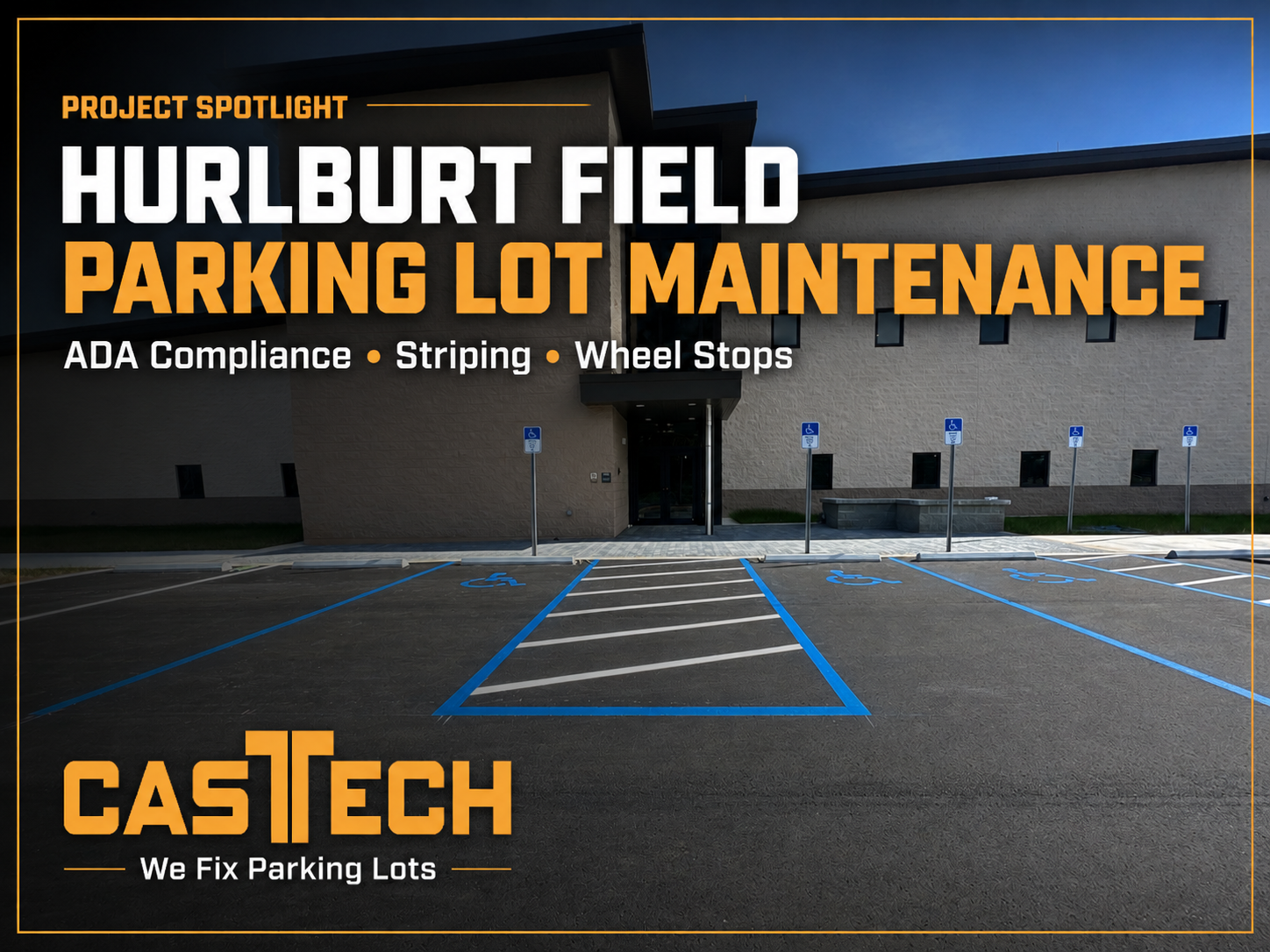
- Mark access aisles with cross-hatch patterns and keep them clear of obstructions and vehicle overhangs.
- Install MUTCD-compliant signs at the proper mounting height and location, and add van-accessible signage where required.
- Confirm routes from stalls to building entrances are level or have compliant ramps and curb cuts with detectable warnings where applicable.
Common mistakes to avoid
- Relying on striping alone without addressing surface drainage, slope, or route obstructions.
- Painting over faded stripes without verifying spacing, stall count, and aisle dimensions against current standards.
- Using low-durability paint in high-traffic or salt-exposed areas; this shortens service life and increases repaint frequency.
- Ignoring signage condition and mounting height—signs are essential even when pavement markings are clear.
Maintenance and lifecycle
- Inspect stripe visibility and signage annually; high-traffic or coastal sites may need repainting every 6–18 months.
- Schedule repainting after resurfacing work and replace signage if bent or corroded.
- Document accessible stall locations and dimensions as-built so future contractors preserve compliance during repairs.
- Include accessible parking in your regular pavement maintenance plan to prevent degradation that could affect routes to the building.
How CasTech can help
- On-site assessments to review current striping, signage, slopes, and routes to entrances.
- Professional restriping and durable material options tailored to traffic volumes and environmental exposure.
- Signage supply and installation that meets MUTCD and ADA mounting conventions.
- Ongoing maintenance plans to keep accessible stalls visible and usable year-round.
If you manage a commercial property, condominium, or municipal lot and need an ADA-focused review or quote, CasTech can perform a site assessment and provide a prioritized scope. See the internal team for a site review or request a written quote through your account representative.
Frequently Asked Questions
How many accessible parking spaces are required?
The number varies by total parking spaces and local code. Federal ADA Standards set minimums based on lot size, but many municipalities add their own rules. CasTech recommends a site assessment to confirm the exact count for your property and to document required signage and locations.
What makes a parking stall ‘van accessible’?
Van-accessible stalls include a wider access aisle and a sign indicating van access; they are located where vehicles can deploy ramps without hitting curbs or obstructions. Exact dimensions are defined by ADA guidance—CasTech will confirm layout needs during a site review.
How often should accessible striping be repainted?
Frequency depends on paint type, traffic, and weather. Many sites need repainting every 1–3 years; coastal, high-traffic, or snow-plow areas may require more frequent touch-ups. Regular inspections identify fading or chipping before compliance and safety are affected.
Can striping alone make a lot ADA-compliant?
No. Striping is only one piece of accessibility. Compliance also requires proper slopes, ramps, curb cuts, accessible routes to entrances, and correctly placed signage. CasTech evaluates the full approach path during assessments to identify fixes beyond striping.
For a site review, quote, or to schedule maintenance specific to accessible parking, consider the internal links in the editor recommendations above. If you want help preparing a scope or budget estimate, CasTech can provide a written property assessment tailored to your lot and local code requirements.
Ready to improve your parking lot?
CasTech can evaluate your property, traffic flow, safety concerns, and maintenance needs, then recommend the right next step for your lot. request a complimentary parking lot assessment or call (850) 860-0014, or contact CasTech with questions about your project.