We plan pavement maintenance around the condition of the lot, drainage concerns, and the areas most important to property access. Before hurricane season, that means identifying repairs early and allowing time for the appropriate work. Surface coating comes after the repairs and preparation it depends on.
We assess and repairs failed pavement first
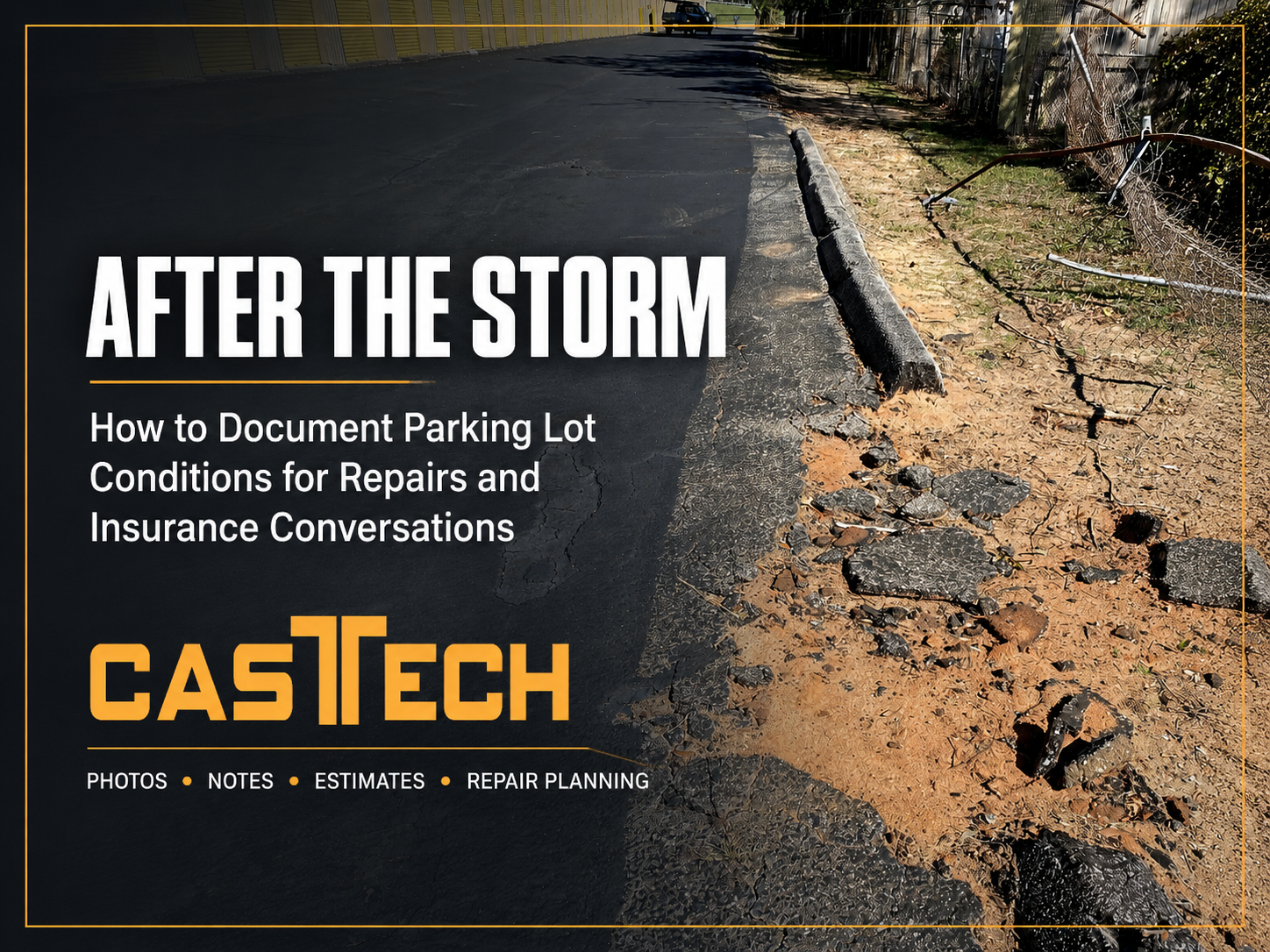
Potholes are the most urgent defects before hurricane season. They are direct pathways for stormwater into the pavement structure. Heavy rainfall and flooding during a hurricane can quickly wash out and enlarge potholes, undermining adjacent asphalt and creating safety hazards and traffic interruptions.
- Our crew completes the approved pothole and pavement repairs before applying a surface treatment.
- Potholes that are likely to be washed out by stormwater (large, deep, or near drainage paths) should be prioritized.
- Full-depth or hot-applied patches are preferred where the base is compromised; temporary cold patches are for immediate safety only.
- Edge failures and potholes in high-traffic or tenant access areas increase liability and operational disruption and should be scheduled first.
We offer targeted pothole and patching work as part of a phased program. For lots at risk of flooding or heavy runoff, start with repairs that restore structural integrity before moving to surface treatments. See our pothole and patching overview for methods and expected service life: Parking Lot & Asphalt Repair.
Then stop water entry: crack sealing
After potholes and full-depth failures are repaired, address cracks next. Cracks act as channels that route stormwater into the pavement base—crack sealing prevents this pathway and protects recent patchwork from further undermining.
- We review cracks, joints, vegetation, and water-related distress to identify the appropriate treatment.
- Our crew prepares and seals suitable cracks using the specified method. Exposed base or failed pavement calls for a repair assessment rather than an assumption that sealing is sufficient.
- Crack sealing reduces the chance that heavy rain will erode fines and wash out patched areas after a storm.
Our crack sealing service is designed to stop water entry and stabilize the surface ahead of sealcoating. Learn more about crack sealing and where it fits in a phased plan at CasTech Crack Sealing.
Sealcoating last: surface protection only after repairs
Sealcoating is a protective surface treatment and must be applied only after structural repairs are complete and cracks have been sealed. Applying sealcoat over unresolved potholes or active cracks traps moisture and can lead to rapid failure during heavy storms.
- Sealcoat is appropriate when the base is sound and the lot has been patched and crack-sealed.
- We review drainage concerns and recurring low spots before recommending coating, coordinating any needed repairs with the responsible project team.
- Our team plans the required application and curing window around the product and weather conditions.
- We develop work zones with your property team, performs the approved coating work, and provides reopening instructions.
Once the pavement is repaired and prepared, we can apply sealcoating where it is an appropriate preservation treatment. We’ll explain the selected system, weather requirements, and reopening instructions in the proposed work plan.
How hurricanes worsen pavement damage
Hurricane conditions—high winds, intense rainfall rates, and flooding—combine to accelerate pavement deterioration in ways that make repairs more extensive and costly:
- Heavy rainfall can rapidly wash fines (small stabilizing particles) from the base and enlarge potholes or cause voids beneath patched areas.
- Flooding saturates subgrade soils, reducing load-bearing capacity and increasing the risk of rutting, base failure, and heaving.
- Strong winds carry debris and block drains, creating new standing-water zones that promote further deterioration.
- Repeated storm cycles without timely repairs multiply the size and depth of failures, increasing downtime and reconstruction costs.
Preventive maintenance—starting with pothole repair, then crack sealing, followed by sealcoat—reduces the pathways and weaknesses hurricanes exploit. Well-timed repairs limit property loss, shorten post-storm recovery, and reduce tenant disruptions.
Phased scheduling to minimize downtime and tenant impact
We design phased schedules so essential repairs are completed in order while preserving site access and operations:
- Priority first-pass: pothole repair and full-depth patching where the base is compromised.
- Second pass: crack routing and sealing to stop water transmission across the lot.
- Final pass: sealcoating in contiguous zones after repairs, scheduled around reliable dry windows.
- Night or off-peak shifts for busy properties, traffic signage, and temporary access routing to protect tenants and customers.
- Post-application inspections and documentation to support maintenance records and warranty guidance.
Request a tailored plan — our site assessments identify which lots need immediate pothole repair, which require crack sealing next, and which are ready for sealcoating. Start with a site review to receive a phased proposal that keeps tenants moving and reduces post-storm reconstruction risk.
Frequently Asked Questions
How far ahead of hurricane season should I schedule repairs?
Schedule assessments and priority repairs as early as possible in the season—ideally weeks to months ahead. Starting early gives us time to confirm availability, discuss materials, and plan the work around the required preparation and curing conditions.
Can sealcoating prevent flood damage?
No—sealcoating protects the surface from oxidation, spills, and minor surface wear but does not stop flood-driven base erosion. Sealcoat must be applied after potholes and cracks are repaired and drainage issues are addressed; preventive pothole repair and crack sealing are the primary measures that reduce flood-related pavement failure.
If you want help prioritizing your parking lot repairs, contact us or call (850) 860-0014. We’ll discuss the property location, visible damage, and timing before arranging the appropriate assessment and recommending a work sequence.