Why asphalt breaks down over time
When we assess an aging parking lot, we look at how traffic, water, weather, and the condition of the pavement are working together. Understanding those causes helps us recommend maintenance that addresses the problem, whether that means preserving suitable asphalt or repairing a failed section.
- Oxidation and UV exposure: Sunlight and oxygen chemically harden the asphalt binder, making the surface brittle and more prone to cracking.
- Thermal cycling: Repeated heating and cooling causes expansion and contraction; this stress contributes to transverse and block cracking.
- Water infiltration: Water that enters cracks weakens the base and subbase, washing fines away and accelerating potholes and rutting.
- Traffic loading: Heavy or repetitive loads produce fatigue cracking (alligator cracking) and rutting in the wheel paths.
- Chemical damage: Oil, gasoline, and other hydrocarbons can soften or strip binder, leading to localized raveling.
- Poor drainage or compaction: Inadequate slope or a weak base increases the pace of deterioration.
Common pavement distresses to watch for
- Alligator (fatigue) cracking — network of interconnected cracks indicating structural stress
- Longitudinal and transverse cracking — cracks running with or across traffic lanes
- Block cracking — large rectangular cracks due to asphalt shrinkage
- Raveling — aggregate loosening as binder erodes
- Potholes — localized collapses from base failure and water
- Rutting — depressions in wheel paths from permanent deformation
What performance charts typically show
Pavement performance charts generally illustrate a declining curve: a relatively high level of service early in life, followed by an accelerating loss of surface properties as oxidation, traffic and moisture accumulate. Maintenance treatments such as sealcoating or thin overlays alter that curve — slowing surface deterioration, preserving the binder and postponing costly rehabilitation.
How sealcoating helps — the functional benefits
Sealcoating is a surface treatment designed to protect the asphalt binder and surface aggregates. When applied correctly it provides several measurable benefits:
- UV and oxidation barrier: Sealcoat limits sunlight and oxygen contact, slowing binder hardening and brittleness.
- Water resistance: A resilient film reduces water penetration into small surface voids and cracks, decreasing freeze-thaw damage and base erosion.
- Surface integrity: By restoring some binder at the surface, sealcoating reduces raveling and loss of fines.
- Appearance and friction: Sealcoating darkens and renews the surface and can help maintain adequate surface friction when properly textured.
- Cost deferral: Regular, preventive sealcoating is a maintenance strategy intended to delay more expensive interventions like milling, overlays, or reconstruction.
Types of sealcoats and selection considerations
Products on the market include coal-tar emulsion, asphalt emulsion, and polymer-modified sealcoats. Selection depends on performance priorities, local regulations, and compatibility with existing asphalt. Consider these factors:
- Site exposure (UV intensity, freeze-thaw cycles, precipitation)
- Traffic types and loadings (parking lots vs. service yards)
- Existing pavement condition — sealcoating is preventive, not structural
- Regulatory or environmental requirements in your area
- Manufacturer’s preparation and application instructions
How we plan preparation, application, and maintenance
Application timing and frequency vary with climate, traffic and product choice, but practical best practices include:
- Initial sealcoating: We check the new pavement’s readiness and the selected product’s requirements before scheduling the first coating.
- Routine maintenance: Our team reviews wear and pavement condition to recommend an appropriate recoating schedule.
- Preparation: Our crew cleans the surface, removes interfering vegetation, and completes approved crack and pothole repairs before coating.
- Weather: Our team schedules application and curing around the selected product’s temperature and weather requirements.
- Test a small area first and verify compatibility with existing surface treatments or markings.
When sealcoating is not enough — signs you need rehabilitation
Sealcoating is a preventive surface treatment. It cannot correct underlying structural problems. Consider reconstruction or resurfacing when you see:
- Extensive alligator cracking covering a large portion of the area
- Significant rutting or settlement from base failure
- Repeated, repaired potholes indicating deeper issues
- Loss of crown or drainage problems that permit standing water
- Sections of the pavement that crumble despite surface treatments
Practical checklist for property owners and facility managers
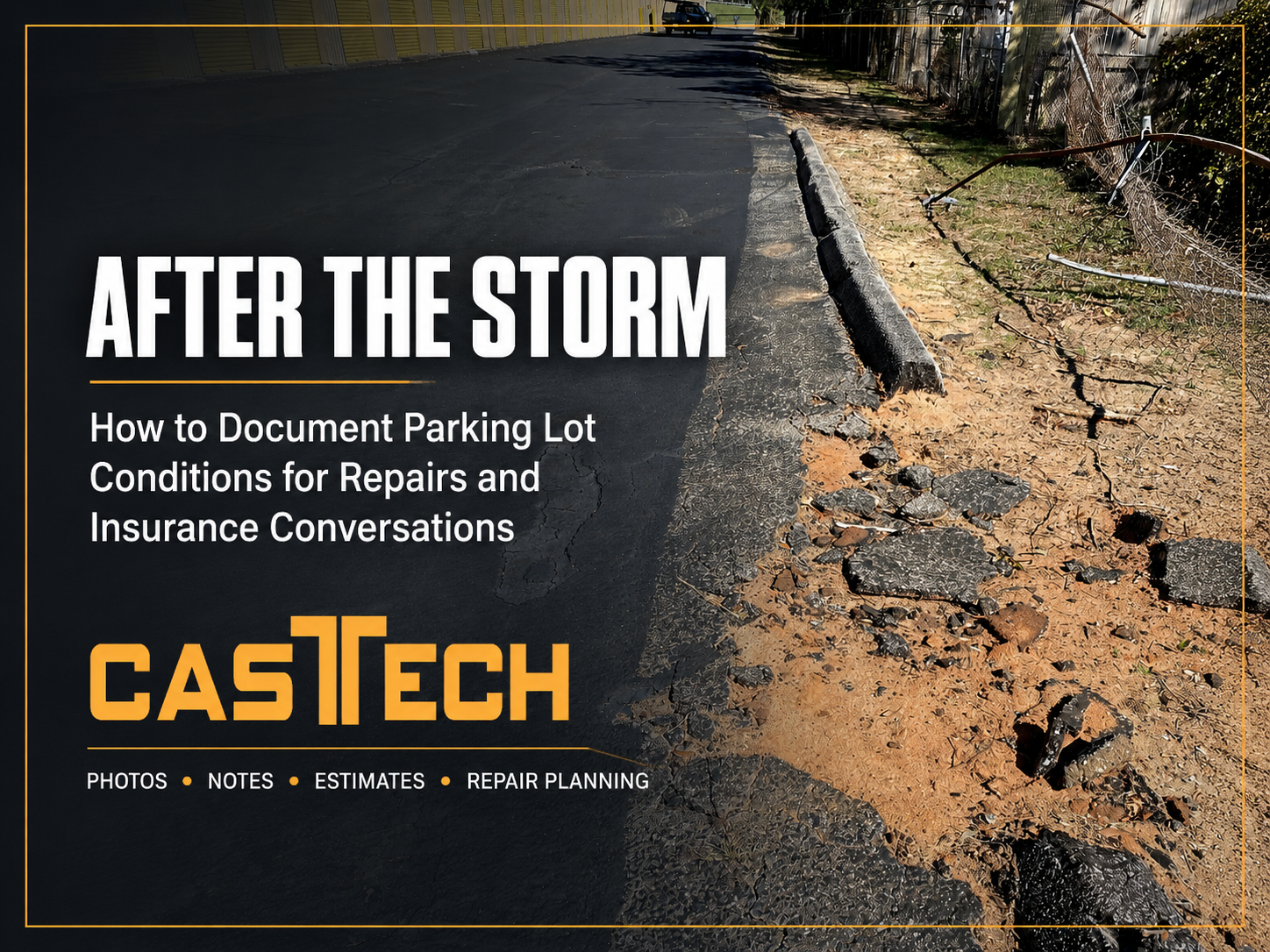
- Document current condition with photos and notes about areas of stress.
- Schedule annual inspections, sooner after severe weather events.
- Keep drains and gutters clear to avoid water pooling on the surface.
- Have us assess cracks and potholes so our team can include needed repairs before sealcoating.
- Request product data sheets and application instructions from suppliers.
- Consider traffic control and staging to allow proper cure after application.
Frequently Asked Questions
How often should I sealcoat my parking lot?
Frequency depends on traffic, climate, the selected product, and pavement condition. We can inspect the lot and recommend the timing for maintenance. Where structural cracking is present, our team evaluates repair needs before proposing another sealcoat.
Will sealcoating stop cracks from forming?
Sealcoating slows surface oxidation and raveling, which reduces the tendency of the surface to form certain cracks, but it cannot prevent structural cracking caused by base failure or heavy repetitive loads. Sealcoating should be part of a broader maintenance program that includes crack repair and base evaluation.
Can I sealcoat over oil or grease stains?
No. Oil and grease can interfere with coating adhesion. We evaluate the affected areas and includes appropriate cleaning, treatment, or localized repair in the proposed preparation.
How long after paving should I wait to sealcoat?
New asphalt needs to be ready for the selected coating. We coordinate with the paving and coating requirements and advises you when the surface can be treated.
What’s the difference between sealcoating and resurfacing?
Sealcoating is a surface-preservation treatment; an asphalt overlay adds a new pavement layer. We assess the existing pavement and its support before recommending coating, an overlay, or a different repair.
Let’s review the condition of your lot
We’ll look at the pavement with you, discuss recurring problems, and explain whether preservation or a more substantial repair fits the property. Contact us or call (850) 860-0014 to discuss your location and arrange the appropriate assessment.